Behind the gates of a 60ha kiwifruit block in Paengaroa is a multi-million dollar building that feels more like a marae than worker accommodation.
The wooden beams meet together in a triangle, like the open arms of the tekoteko on a wharenui.
There’s enough space for 100 people to rest after a hard day’s mahi, a kitchen to prepare the kai and Māori carvings that will share the kōreo of the whenua it’s built on.
Paengaroa North K’s new building isn’t just an accommodation facility for seasonal kiwifruit workers. It’s a whare grounded in manaakitanga.
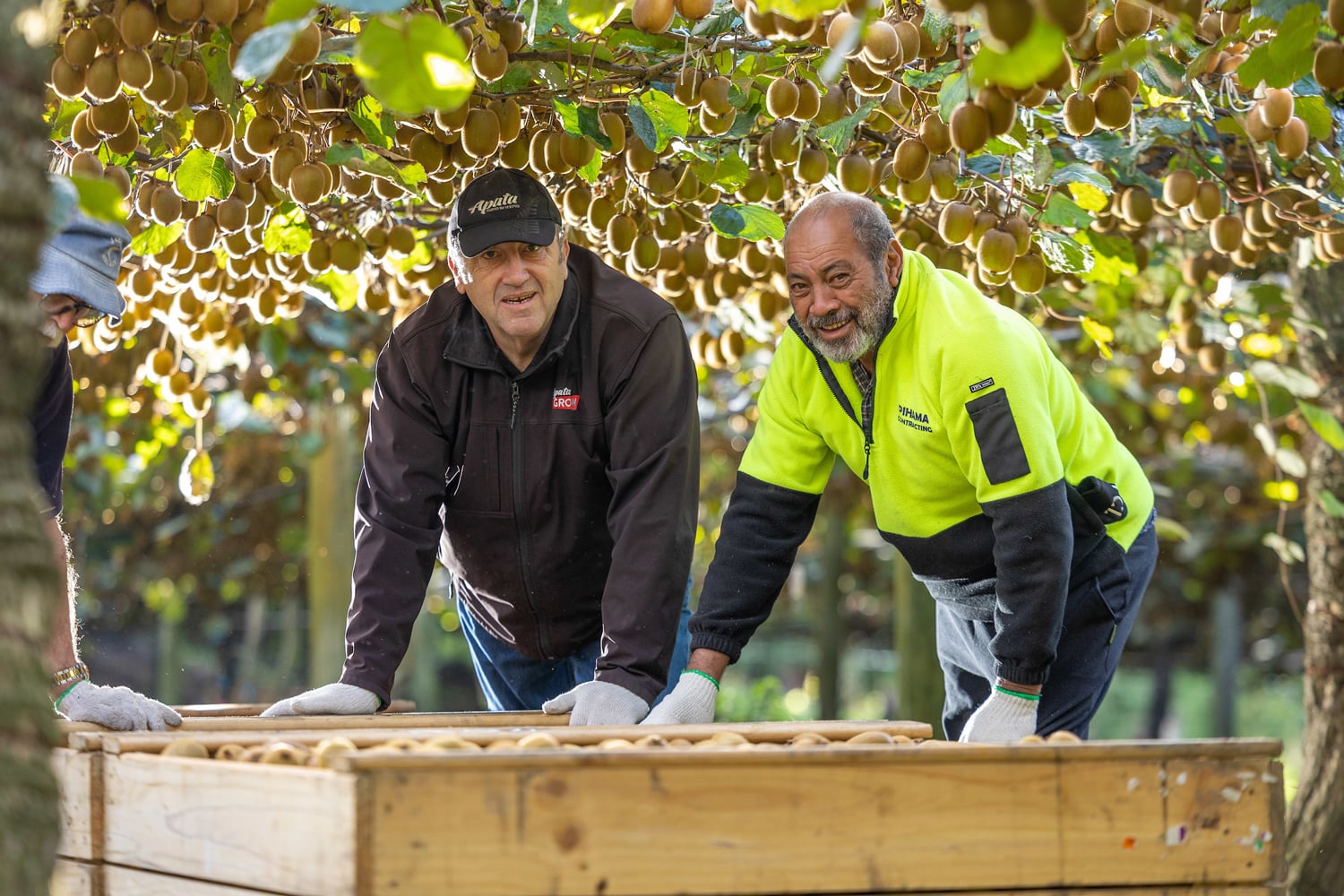
“We look after our kaumātua, our rangatahi and our mokopuna. It’s the same with our workers. They’re our workers, but they are like whānau,” says Trust chairman Joe Pihama (Ngāti Rongomai).
“It’s important they feel welcome and they’re not just another number to go about their mahi.”
The boss of a Bay of Plenty post-harvest company says the “aspirational” build could lead the way in how seasonal worker accommodation is built in the future.
The build is a significant milestone in Paengaroa North K Trust’s haerenga (journey).
Ten years ago, the trust was in a very different position and an underperforming orchard painted a much bleaker picture. Now, with strategic leadership, hard work and a commitment to kaitiakitanga they’ve turned the kiwifruit operation around.
The trust has faced many challenges, including when PSA hit, and the kiwifruit disease wiped out a significant amount of the green and gold crops.
A key turning point for Paengaroa North K, Joe says, was having strong governance, bringing in the right skills to grow exceptional kiwifruit and fostering a long-term relationship with post harvest company Apata and its board chairman Mark Mayston.
“He saw the potential and significant opportunity of our block and helped steer the Trust in a new direction,” Joe says.
“This whenua has been our food basket for many years. As Māori, we can grow food and kai no problem. But we’re striving to produce exceptional fruit and to do this you’ve got to have the right people on board. Our growing team, headed by Louis Berger, is a big part of our orchard’s success.”
It wasn’t until 2015 that the Trust was able to really see their hard work pay off financially.
Apata Group board chairman Mark Mayston says PNK has turned around “dramatically” in the last decade.
“They should be really proud of what they’ve achieved over the last 10 years because they have done a complete U-turn.”
That included grafting about 7ha of Hayward green into gold, and investing more into orchard repairs and maintenance.
In 2020 the Trust – formerly Paengaroa North B1, B2 and B3 aggregated with B4B block – went into pāhekoheko (joint partnership) with neighbouring land Paengaroa North B10A.
“Our long-term vision has always included seeing other Māori land blocks succeed,” Joe says. “Being able to joint venture with and see the financial gains we’ve obtained from growing kiwifruit come into fruition with our whānau over the fence has been amazing.”
It is the success of the last decade that has allowed the Trust to fund its future.
When the RSE scheme changes brought in stricter requirements for RSE accommodation in 2024, no longer allowing rental houses and campsites to be used, the Trust began investigating the idea of taking on a build project of its own.
It began looking at potential off-site locations, crunching numbers and comparing them against other investment opportunities.
That’s when something clicked. Joe looked out at PNK’s own land and thought why not build right here at home.
“It needed to be done. These workers needed to be looked after and we really need our workers,” Joe says.
“This whenua belongs to our people, so it’s not going anywhere. This is going to be here for a long time.”
The accommodation features 100 beds, a wharekai (dining hall), whare paku (toilets), and a marae ātea (recreational space). The plan is for its workers to move in at the start of July 2025.
“We wanted it to be just like us, just like our marae.”
A mauri stone – a sacred stone in Māori culture that represents the lifeforce of a place or person – will be placed in the centre of the marae ātea for workers to connect not only to the whenua but to their families back home.
“They’re a long way from home. They need to be able to feel wanted and welcome. We want them to feel like this is their home too,” Joe says.
Mark says the Trust’s “marae style” accommodation facility means seasonal workers can stay close to the orchards they’re working on.
“It can be taxing to leave your country and your family for seven months. Being rurally based on the orchard means we can grow a hub for everyone and it just gives that feeling of being more at home,” Mark says.
“It has all of those real touches of New Zealand. This is aspirational and it won’t be the last. You can’t get any better.”
Back on the deck of the almost-complete accommodation block, Joe takes a moment to appreciate how far they’ve come.
“I am totally proud. I believe this is where we were heading right from the start.”
Not only has PNK transformed their whenua into a model of sustainable enterprise, they’re lighting the way forward for other Māori landowners across the motu.
Beyond the success on his own whenua, Joe’s mission is much bigger. He wants to support other Māori landowners too and share the knowledge PNK has to enable others wanting to move into the kiwifruit industry.
“And that goes to the heart of the type of people PNK are. They are an unbelievably genuine group of people who really appreciate the journey they’ve been on,” Mark says.
“They are looking to build a sustainable future for everybody.”
This is only the first chapter in a much greater success story.
“Oh yes, this is only just the beginning,” explains Joe.
By Zoe Hunter
This article was originally published by The NZ Kiwifruit Journal August 2025, issue number 292, p. 55-58, photo by Jamie Troughton, Dscribe Media.