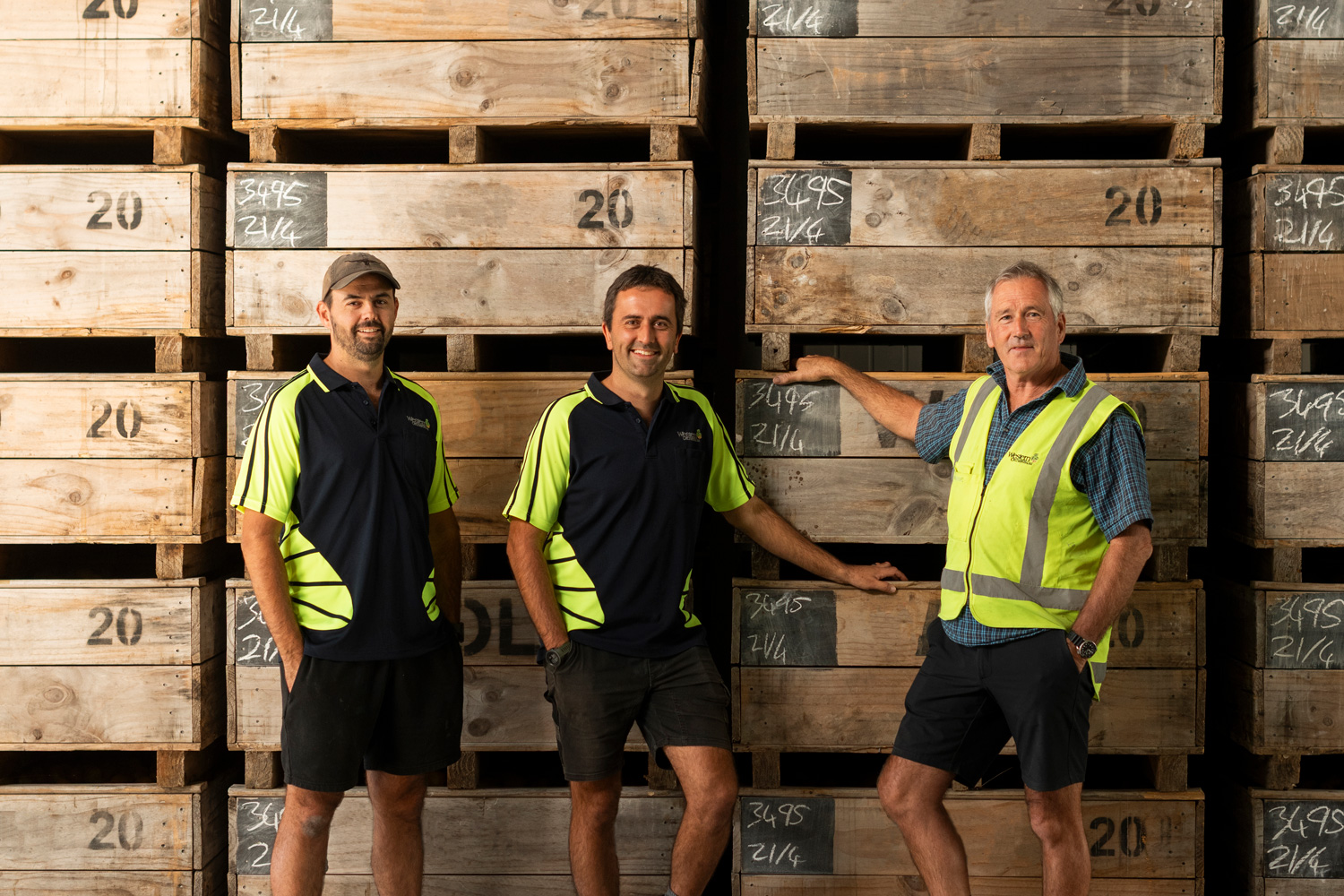
Succession planning is one of the biggest challenges facing New Zealand’s kiwifruit sector. For Sean Carnachan, a second-generation grower from Katikati, it’s something he’s been thinking about for more than 30 years.
Back in 1995, when his eldest son was still a baby, his bank manager sent him to a succession planning seminar in Rotorua. “At the time I was only 30 years old, and I thought, far out, why am I here? My bank manager said, ‘trust me, you’ll get it at some stage.’”
Sean says that advice planted an important seed, and more than three decades later, his long-term planning is now coming to fruition.
Sean and his wife, Jo, run Western Orchards Ltd, a Katikati-based orchard management and post-harvest business, while also growing green, gold and red kiwifruit. Sean has held many leadership roles during his 44-year career. He currently sits on the board of Apata, Kiwifruit Growers Incorporated (KGI) and the Industry Advisory Council (IAC) and is considered one of the industry’s more experienced and respected figures.
For Sean, succession planning has never been something to leave until retirement.
His eldest son Lockie, 33, is now General Manager of Western Orchards and co-owns his own orchard. While younger son Dion, 31, is now a grower while continuing to work as a refrigeration engineer.
Learning the ropes early
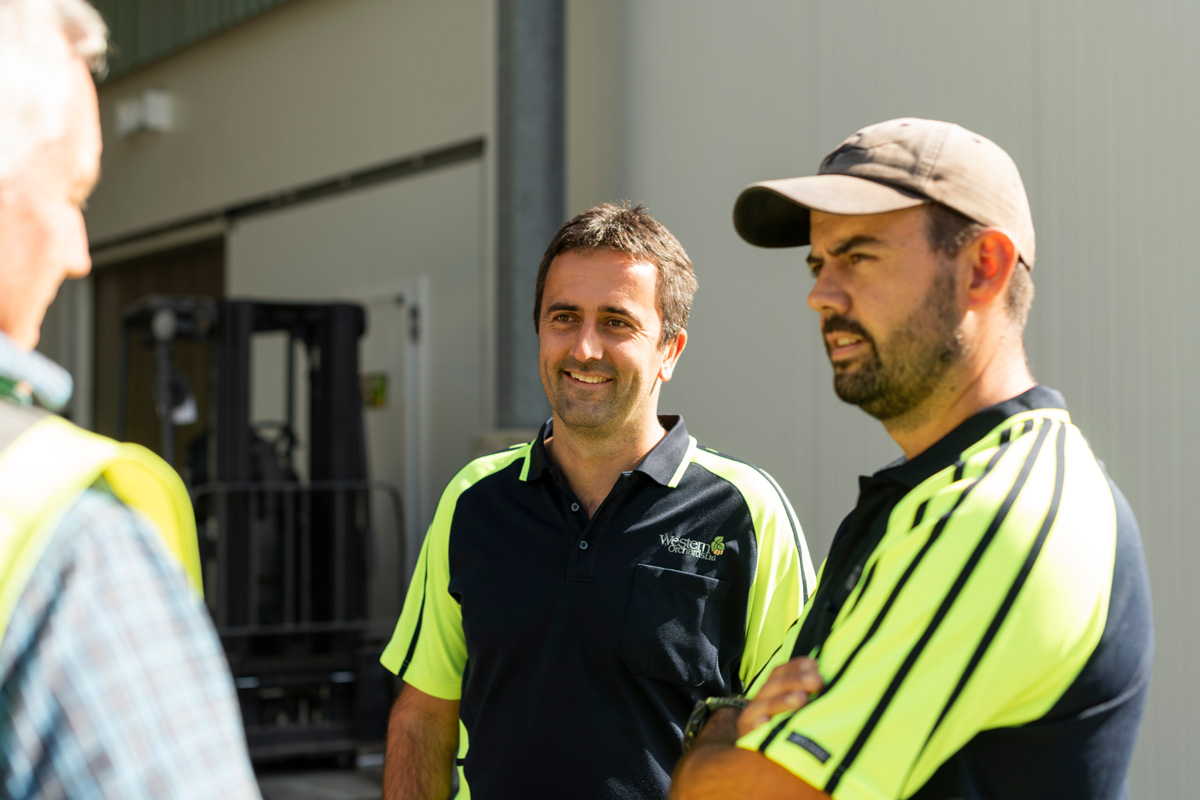
Both Carnachan brothers grew up immersed in orchard life.
“When we were really little we worked in the packhouse,” Lockie recalls. “We’d make up a whole heap of boxes and build a big fort that you’d have to climb through to get to the grading tables. The older staff enjoyed it – they’d spend their whole shift just feeding boxes through because we’d already made them all.”
Dion also has fond memories.
“My wage back then was whatever my age was,” he says. “As we got older we learned how to load trucks and drive tractors. We’d get off the school bus at 3pm and get straight to work, especially over the harvest.”
The opportunity to work was always there but the boys had to prove themselves.
Sean & Jo were very clear that if their sons wanted to join the kiwifruit industry one day, they first needed experience elsewhere.
“We encouraged the boys to go away and get a career,” he says. “In times of adversity in our industry, the ability to earn off-orchard income is really critical. Plus, you learn other transferable skill sets that you can bring back to different businesses.”
Lockie trained as a civil engineer and spent 12 years working on major infrastructure and subdivision projects in the Bay of Plenty and Waikato before returning to his kiwifruit roots. Dion became a refrigeration engineer and has specialised in commercial and residential air conditioning for more than a decade now.
Looking back, Lockie agrees it was the right approach.
“I think it’s pretty impressive that Dad wanted to make sure we were happy with what we chose to do,” he says. “It’s a big risk for him, because we could have both buggered off and never come back.”
Coming back – for the right reasons
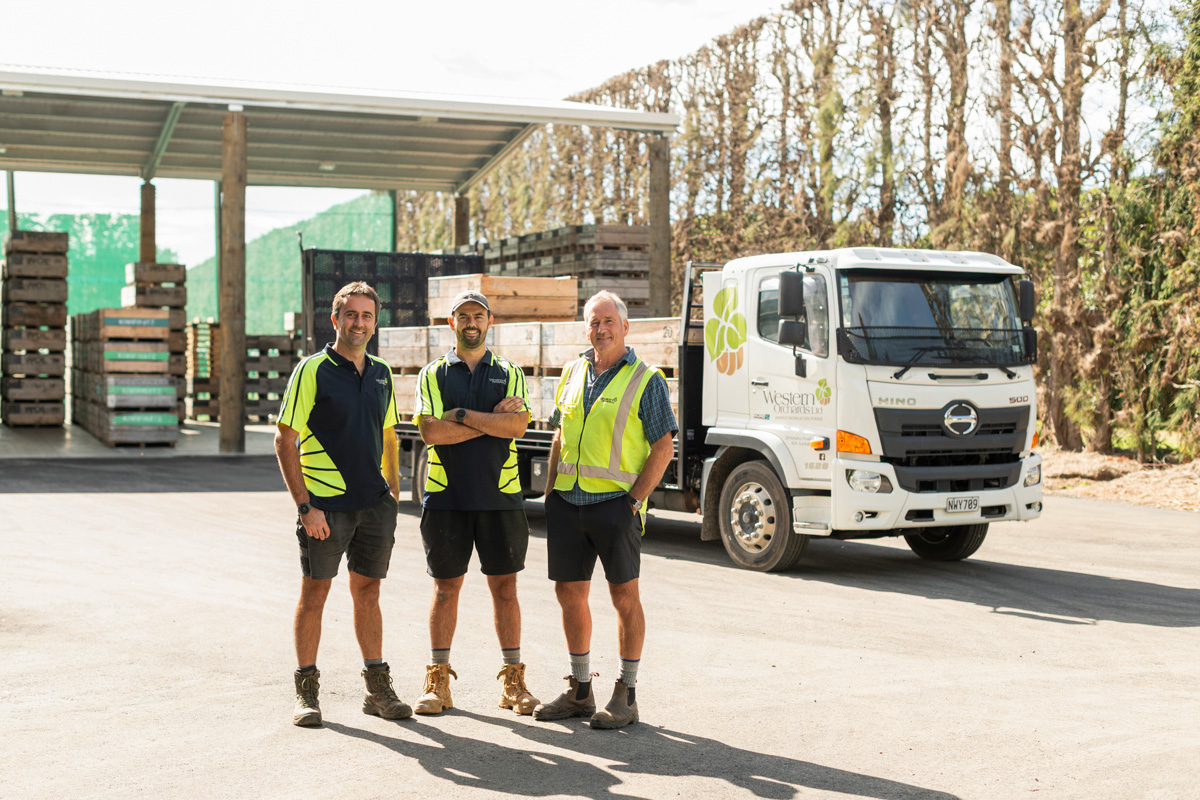
Returning to the family business should never be a spur-of-the-moment decision, Sean says.
“You don’t just decide one day that you’re having a bad day at work and you want to come back home. These conversations need to happen several years out, because we’ve got to have a plan on how it’s going to work and how you’re going to fit into the business,” he says. “What skill sets are you going to bring back to add value? Because we don’t just employ you because your surname is Carnachan. You have to have something better than that to offer.”
For Lockie, the discussions stretched over several years while he was still working in engineering. In 2021, he and his wife sold their house in Taupō, left their jobs and purchased a 4.25-hectare orchard just down the road from his parents.
“I’m not just here for the money,” Lockie says. “The lifestyle is incredible. The constant learning in the kiwifruit industry, the co-operativeness and willingness to share knowledge.
“Construction is very, very competitive. Everybody is out for themselves. Kiwifruit is a lot different. If you come up with a cool idea about growing, you’re going to go tell everybody because it benefits everybody thanks to the Zespri model.”
Dion and his wife are following a similar path. In 2023 they purchased a 1.4-hectare orchard and converted it from green kiwifruit to red. “Every day is a learning curve and I want to learn as much off Dad as I can.”
He hopes to eventually join the family business alongside his brother.
“I know we’ll be good at working together,” he says. “I see myself probably as a bit more hands-on than my brother is. He’s probably a bit more suited to all the administrative stuff, and I’m probably a bit more operational.”
Starting from the bottom
When Lockie returned to Western Orchards, he didn’t step straight into management.
“I came in and was given a pair of kiwifruit lopers and told ‘off you go’. So I started at the bottom and learned everything. I didn’t want to go into any position personally without knowing what I’m talking about. I learned the art of what we do from the ground up. And at the same time, I was looking at opportunities to improve efficiencies. The whole science behind it, and what actually gets done, is substantial compared to what I saw as a kid.”
Sean says that approach was particularly important given the experience of long-standing staff.
“I’ve got staff that have worked for me for more than 30 years,” he says. “So when the young fellow turns up, I didn’t want them to think ‘oh God, another Carnachan’.”
The transition was carefully managed over two years as reporting lines gradually shifted.
“I do my absolute best to not interfere with the day-to-day stuff,” Sean says. “It’s important that Lockie takes that responsibility and people have one direct report to him. And it’s working well.”
Today, Sean is enjoying being able to take a step back. Although he has no plans to retire from growing anytime soon. “My phone doesn’t ring all day every day anymore,” Sean says. “Jo and I had two holidays last year!”
Discussions are underway for Lockie and Dion’s wives, Sammy and Holli, to take on roles within the business in years to come which will allow Jo to take a step back also.
Opportunity – not entitlement
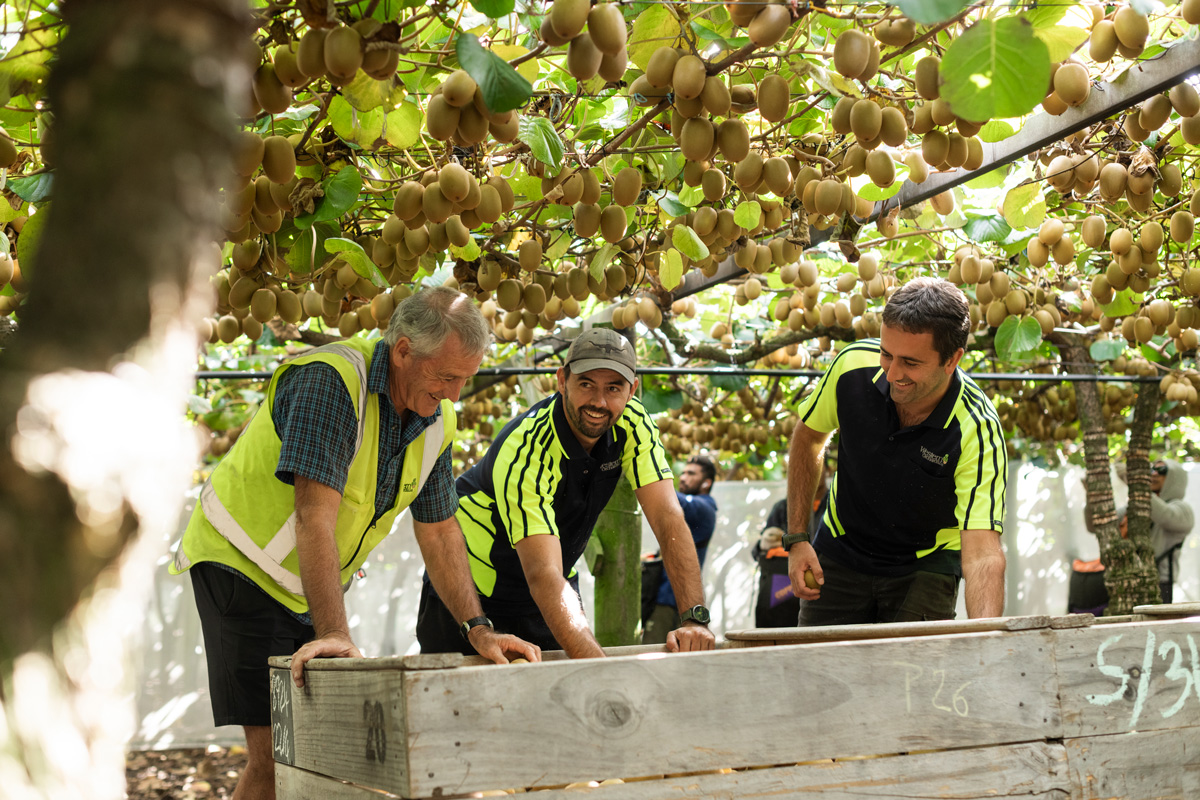
Despite the family connections, Sean is clear that the next generation has not been handed anything.
“It’s too easy for farming families to give kids too easy a leg up,” he says. “Our boys have been given an opportunity but definitely not a leg up. The biggest thing that gets you out of bed every morning is debt on the table. They’ve raised their own capital and have both got reasonable debt that they need to manage.”
Lockie agrees.
“There’s definitely been support, but nothing’s been handed to us on a platter. We’ve got a significant mortgage, which is good. It’s that pride of saying ‘yes I am a grower’. You get more out of it. I’d encourage all young people to get into kiwifruit.”
Both brothers now own orchards and are building their own businesses alongside their involvement in the wider family operation.
Sean believes forcing the next generation into the business is a mistake.
“I think some people do it too early. Then the kids will feel obligated and I think that’s wrong. Some kids are not remotely interested. They’ve seen their parents work their ass off and for very little money and think ‘why do I want to do that?’ So it’s not for everybody. We are just fortunate we’ve got two sons and two daughters-in-law that are interested. If you force it on them, I think it would end up disastrous.”
A future worth growing
In Lockie and Dion’s case, their interest in kiwifruit has come naturally. But perhaps their biggest motivation is family as they both now have young children of their own.
“We had an amazing upbringing and the lifestyle and opportunities our parents were able to provide us – I couldn’t dream of anything better,” Lockie says. “I want the same thing for my children and wife. You create some amazing friendships in this industry too.”
Dion admits he’s always wanted to be like his father. “He’s been the best dad you could ever wish for – a really good role model. It was always my plan to go away, live the life I wanted and then come back and help grow the family business. I’d love to get to where Dad is one day but we’ll see. That’s the goal.”
For Sean, seeing the next generation step forward is one of the most rewarding parts of a long career.
His advice to other growers thinking about succession?
“Probably spend more time listening to them,” he says. “And accept that they’re going to do things differently because it’s a modern way.”